
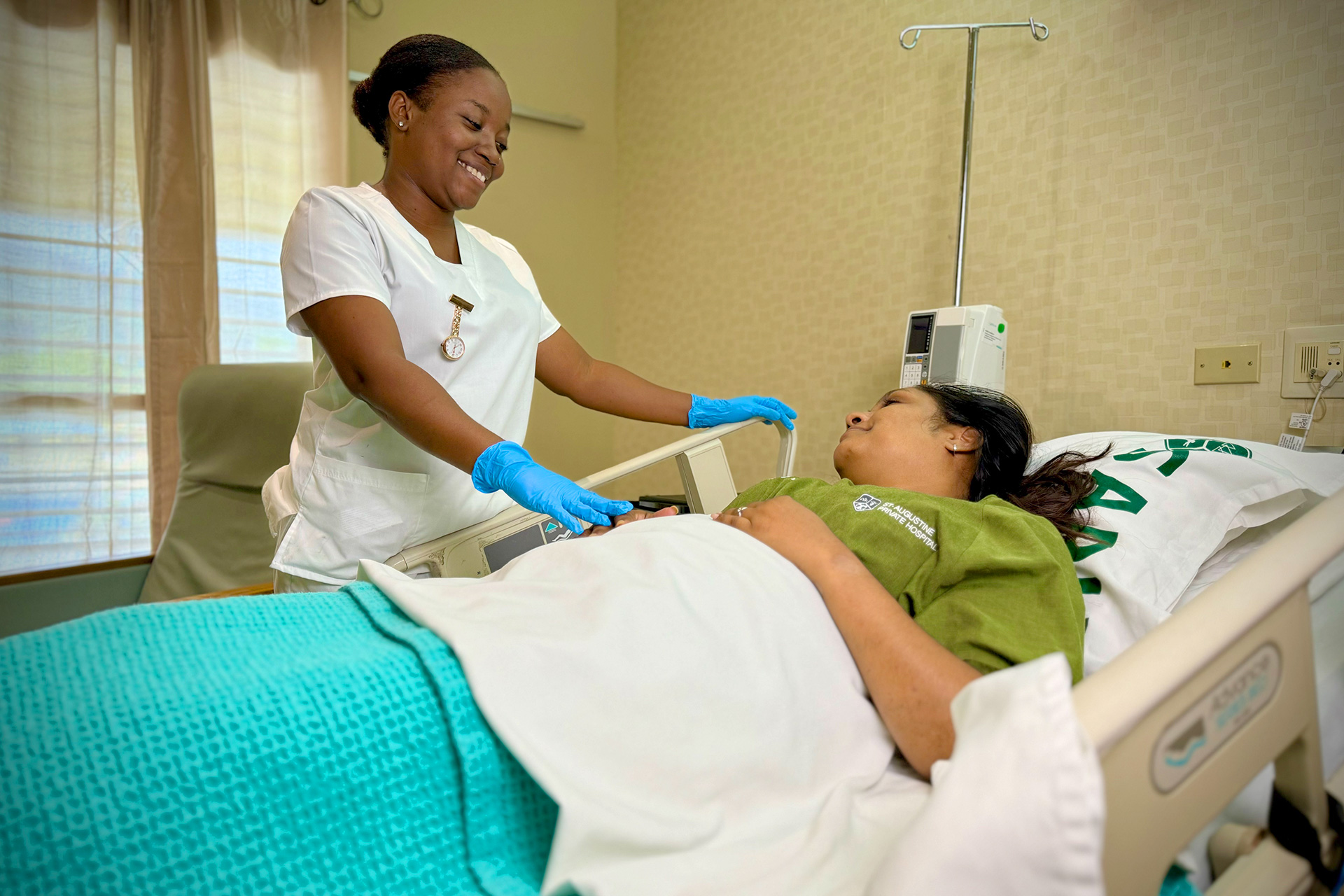
The objective of the proposed Patient Care Assistant (PCA) training program is to develop highly competent and dedicated individuals who will provide high-quality, compassionate, and essential support for patients across various healthcare settings.
PROGRAM OBJECTIVES
Objectives for a PCA program focus on developing compassionate, skilled caregivers who provide safe, person-centered care, emphasizing strong communication, infection control, assisting with daily living (ADLs), monitoring vitals, and upholding ethical standards, preparing them to work effectively within the healthcare team. Key objectives include fostering clinical skills, understanding patient rights and diversity, and promoting patient independence.
By the end of the training period students will:
- Clearly describe the holistic role of PCA in various healthcare and home care settings.
- Develop effective interpersonal, verbal, and written communication for patients, families, and teams.
- Efficiently assist diverse clients with basic activities of daily living (examples- personal care and physical needs), and instrumental activities of daily living (examples- meal preparation and medication management).
- Apply standard infection prevention and control precautions, safety protocols, and basic emergency response (CPR).
- Perform basic clinical skills of vital signs, basic patient care (hygiene, grooming, mobility), bed-making, urinalysis, blood glucose monitoring, ECG.
- Apply basic knowledge of body systems, medical terminology, and common abbreviations in health care settings.
- Monitor and report changes in patient physical and emotional status accurately.
- Record information accurately on patient charts.
- Provide compassionate care that respects individual uniqueness, culture, and needs.
- Collaborate effectively with other healthcare professionals.
- Demonstrate accountability, reliability, and a positive attitude.
- Use critical thinking to address patient needs and challenges.
- Maintain patient confidentiality, patient rights, and professional conduct.
PROJECT STRUCTURE
Duration:
Fifteen weeks (3-4 months)
Total Instructional Hours:
Approximately 210- 220 hours
Learning Components:
Didactic (classroom/online)
– Approximately 55- 60 hours over the first 9 weeks
Practical lab training
– Approximately 55- 60 hours over the first 9 weeks
Clinical practice
– Approximately 100 hours (3 months) @ approximately 16 hours/ week for the last 6 weeks
ENTRY REQUIREMENTS FOR TRAINEES
- School leaving certificate Age 18- 45 years
- Prior training/ experience in healthcare is an asset
- Physical Fitness: Applicants will receive a medical and physical fitness evaluation
- Communication Skills-Strong verbal and written communication skills
PAYMENT OPTIONS
Course Fee -$4,000
plus Registration Fee – $500.00
- 50% of course plus registration fee to register for the course.
- Balance 50% of course to be paid after the first 4 weeks of the course.